Part 1: The Domestic Shock – How El Nino Disrupts India’s Pulse Belts
16 October, 2026
Admin
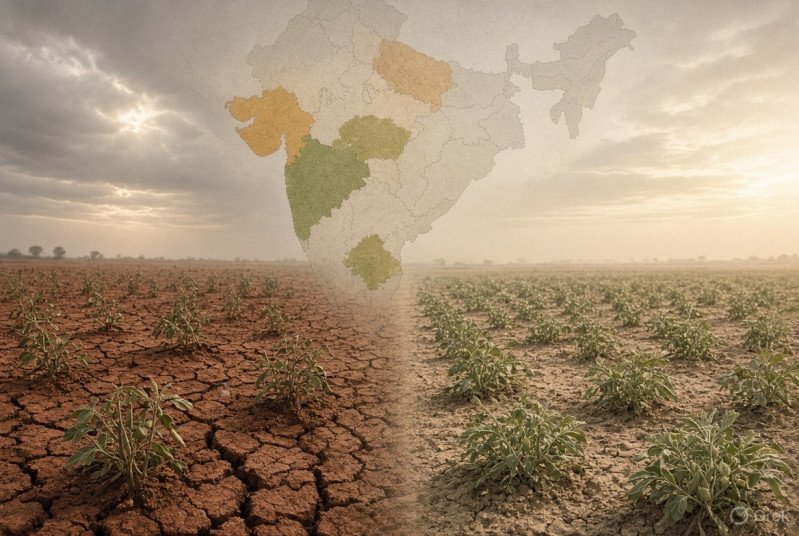
For the AgPulse community, tracking El Niño is as critical as tracking daily mandi arrivals. In India, pulses are not just a staple; they are the foundation of protein security for over a billion people. Because domestic consumption is highly price-inelastic, even a marginal dip in production ripples violently through the market.
Unlike staple cereals supported by extensive canal networks, more than 80% of India’s pulse acreage is rain-fed. Concentrated in the semi-arid and marginal tracts of Maharashtra, Madhya Pradesh, Karnataka, Rajasthan, and Uttar Pradesh, these crops are exceptionally vulnerable to climate disruptions across both farming cycles.
The Kharif Vulnerability (Tur, Urad, Moong)The southwest monsoon dictates the fate of Kharif pulses. El Niño typically delays the monsoon's onset or triggers prolonged dry spells in June and July.
The Rabi "El Niño Overhang" (Chana, Masoor)The Rabi pulse complex—dominated by Chana (chickpea), which constitutes nearly half of India's total pulse basket—suffers from the lingering effects of a poor summer monsoon.
Accelerated Maturity:El Niño often brings above-normal winter temperatures to Central and North India. Warmer conditions accelerate the crop's maturity, causing premature senescence and shrinking grain size (pod-filling failure), directly capping yields before harvest.
Discover in real-time how our product can transform operations, enhance decision-making, and drive growth. Book your free demo today to see the difference for your business!

Global Intelligence for Pulses, Grains & Oilseeds
Empowering informed decisions across the agricultural value chain with timely market insights, forecasting models, and trade analysis.
Follow Us