Russia Opens an Arctic Grain Export Route, but High Costs Limit Its Potential
15 October, 2026
Admin
Murmansk offers Russia an alternative to disrupted southern ports, but it is unlikely to replace the Black Sea’s scale and cost advantage.
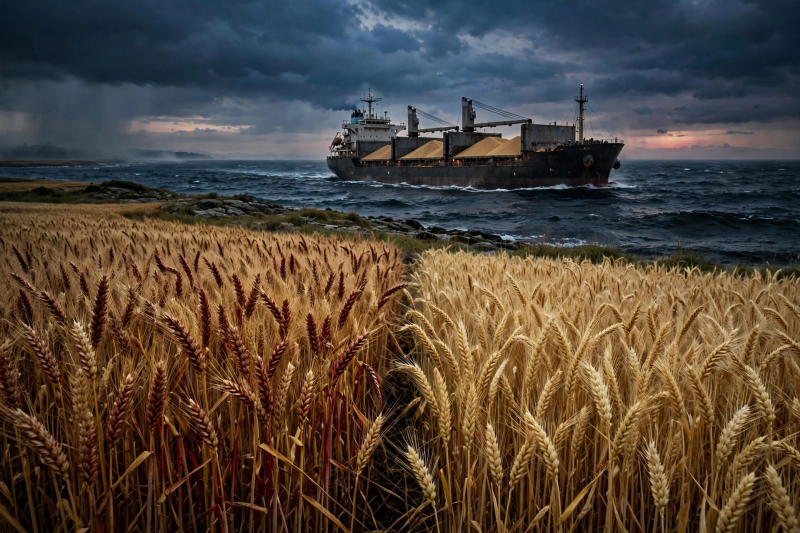
Russia has begun exploring a new route for grain exports through Murmansk, an Arctic port traditionally associated with coal, ore and metals. The move reflects Moscow’s efforts to maintain export flows amid disruptions and growing logistical risks affecting its traditional Black Sea and Azov export corridor.
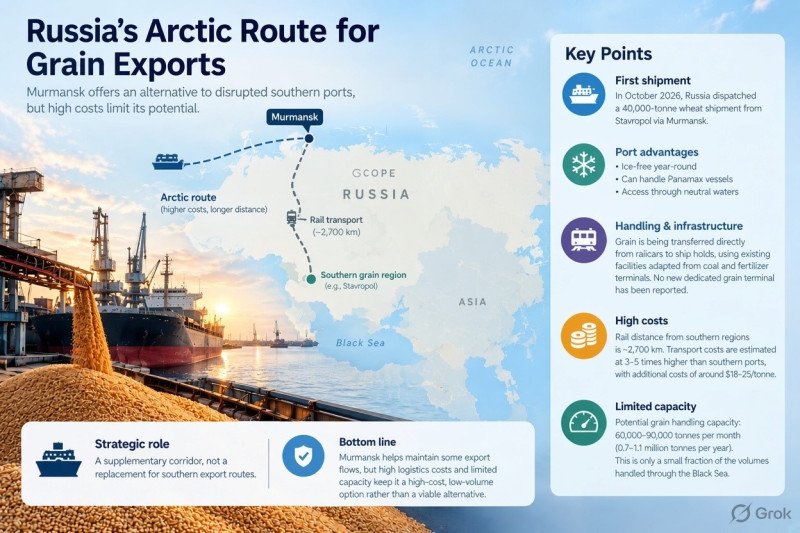
In October 2026, Russia reportedly dispatched its first 40,000-tonne wheat shipment from the Stavropol region via Murmansk. The shipment followed preparations to adapt existing port infrastructure and secure rail transport from southern grain-producing regions. Rather than relying on a newly built, dedicated grain terminal, the operation uses existing facilities and logistics arrangements to facilitate grain handling. 
A strategic alternative, not a replacement
Murmansk offers some operational advantages. Its port is ice-free year-round, can accommodate Panamax-class vessels and provides access to international waters. Its northern location may also offer an alternative when security risks or operational constraints affect other export routes.
However, moving grain from southern Russia to Murmansk presents a significant logistical challenge. The rail journey is approximately 2,700 kilometres from the Novorossiysk area, adding substantial inland transport costs compared with shipments routed through southern ports.
Industry and official estimates suggest that transporting grain through Murmansk could cost three to five times more than using southern ports, with additional costs reportedly estimated at around $18–25 per tonne. These figures are reported estimates rather than confirmed costs for every shipment, but they highlight the challenge of making the route commercially competitive. 
Infrastructure is another constraint. Murmansk’s reported annual port capacity of up to 24 million tonnes covers all cargo types, not grain alone. Estimates suggest that its potential grain-handling capacity could reach approximately 60,000–90,000 tonnes per month, equivalent to 0.7–1.1 million tonnes annually. This remains small relative to the 46.3 million tonnes of grain reportedly exported through the Azov–Black Sea basin in the referenced season.
What it means for the global grain market
Murmansk could provide Russia with an additional contingency route, helping preserve some export volumes when traditional southern outlets face disruption. Priority rail access and state support may ease operational bottlenecks, although they cannot eliminate the route’s structural cost disadvantage.
For international grain buyers, the key question is whether Russia can sustain shipments through the Arctic port at commercially viable prices and volumes. For competing origins, the route is worth monitoring, but its current scale does not suggest a near-term replacement for Russia’s established southern export system.
Market outlook:Murmansk is best viewed as a supplementary safety valve for Russian grain exports—not a substitute for the Black Sea. Its longer-term significance will depend on actual shipment volumes, freight economics and the duration of disruption to traditional export routes.
Discover in real-time how our product can transform operations, enhance decision-making, and drive growth. Book your free demo today to see the difference for your business!

Global Intelligence for Pulses, Grains & Oilseeds
Empowering informed decisions across the agricultural value chain with timely market insights, forecasting models, and trade analysis.
Follow Us