Part 3: Rewriting Global Trade: The Strategic Conclusion of Kazakhstan Pulse Shift
07 October, 2026
Admin
Related Article:
Part 1: The Pulse Revolution: Mapping Kazakhstan’s Historic Lentil Boom
Part 2: Concrete and Infrastructure: Who Is Building Kazakhstan’s New Processing Matrix?
Introduction
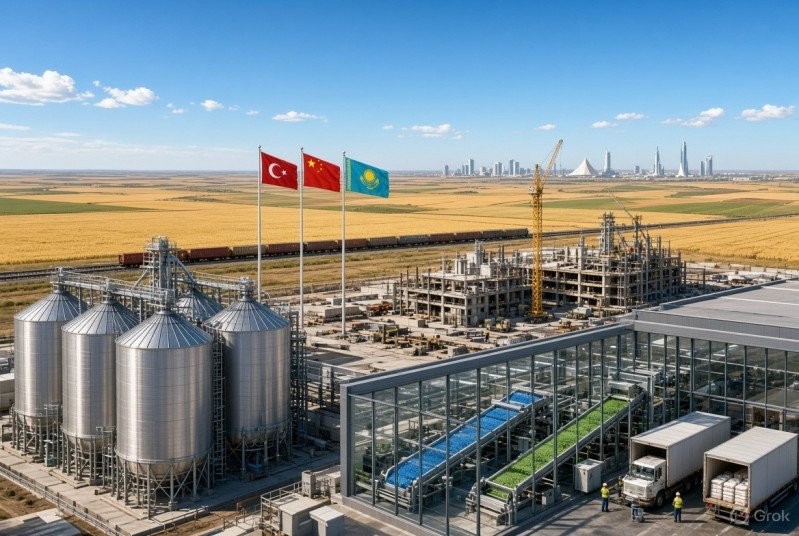
Kazakhstan’s evolution from a raw-crop exporter toward localised processing is a clear case of economic adaptation. By raising food-grade purity and packaging standards closer to the point of harvest, the country is changing how its pulses reach global markets.
Backed by the State: The 70% Target
The shift is deliberate policy. The government has set a firm objective to raise the share of processed products within total agricultural output and exports toward 70%. By the end of 2025 the figure for key categories had reached approximately 64%; the 70% target is set for 2026.
Through Kazakh Invest and related instruments, authorities support new facilities with:
1. Fast-track investment contracts that reduce bureaucratic delays.
2. Substantial tax exemptions for deep-processing equipment and operations.
3. Subsidised logistics and infrastructure connections (utilities, roads and rail access).
The New Supply-Chain Model
The traditional pattern was inefficient:
- Kazakh fields → bulk raw railcars → foreign middlemen (especially Turkey) → cleaning/packaging abroad → global markets.
The emerging model shortens the chain:
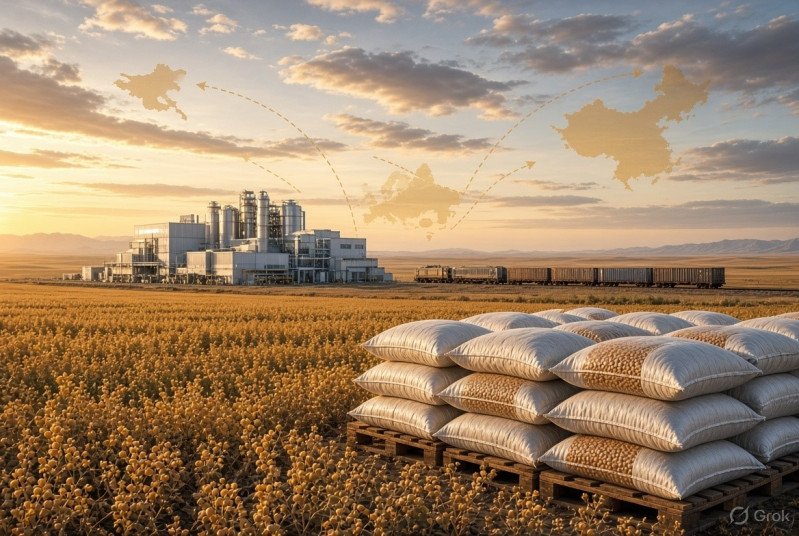
- Kazakh fields → local optical sorting, cleaning and packaging → higher-value or retail-ready product → more direct routes to end markets.
Local processing reduces the volume and weight of shipments that must cross long distances and allows exporters to meet stricter quality specifications demanded by European and other buyers.
Primary Destination Nodes
Containerised rail and established trade corridors now move both raw and increasingly processed Kazakh lentils toward three main consumption zones:
- Turkey remains the dominant destination by a wide margin, absorbing the large majority of volumes (both for domestic use and re-export).
- European retail and processing channels, notably Italy, are taking growing quantities of colour-sorted and higher-purity product.
- Middle Eastern hubs, particularly the UAE, are expanding direct procurement for food-security and distribution needs.
- China is an emerging outlet via rail border crossings such as Alashankou; volumes are still modest relative to Turkey but have begun to rise.
Final Thoughts
Kazakhstan’s transition is well underway. Record harvests, expanding Turkish pulse-processing capacity (including Tiryaki, Arbel and Armada Foods), complementary large-scale grain investments, and clear state incentives are locking in a structural shift from raw-commodity exporter to value-added supplier. While Turkey continues to dominate trade flows, the combination of local sorting, packaging and deep-processing capability is steadily improving margins and opening more direct routes into European, Middle Eastern and Asian markets. The country’s position as a significant, increasingly sophisticated player in global pulse supply is now firmly established.
Discover in real-time how our product can transform operations, enhance decision-making, and drive growth. Book your free demo today to see the difference for your business!

Global Intelligence for Pulses, Grains & Oilseeds
Empowering informed decisions across the agricultural value chain with timely market insights, forecasting models, and trade analysis.
Follow Us