Black Sea Disruptions Reshape Russia and Ukraine Agricultural Export Logistics
30 August, 2026
Admin
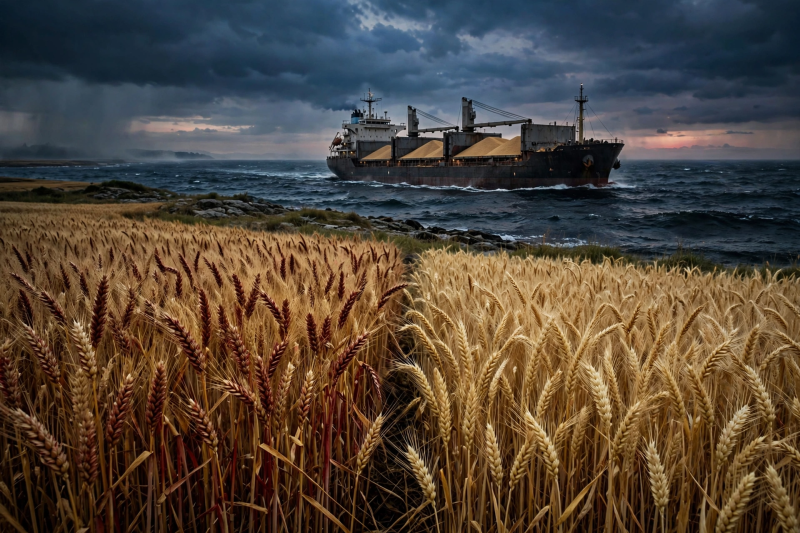
The Black Sea has become an increasingly difficult corridor for agricultural exporters. Russia and Ukraine are both diverting cargo onto longer, more expensive, and capacity-constrained routes.
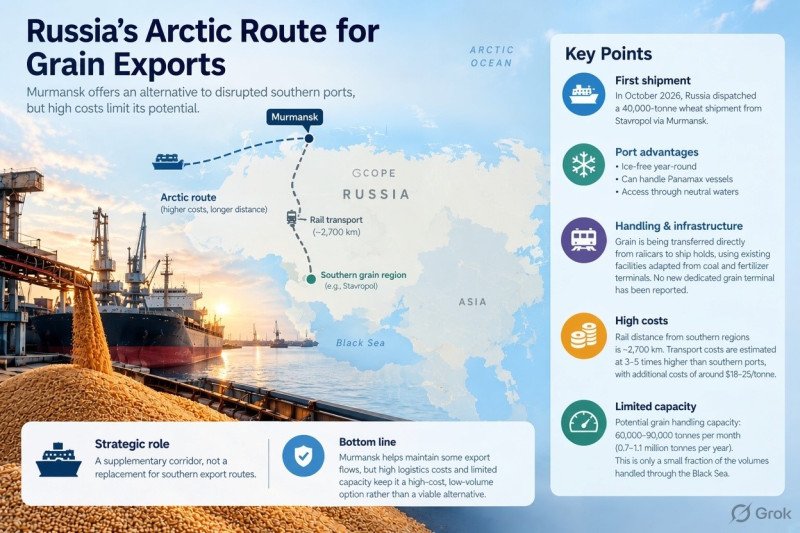
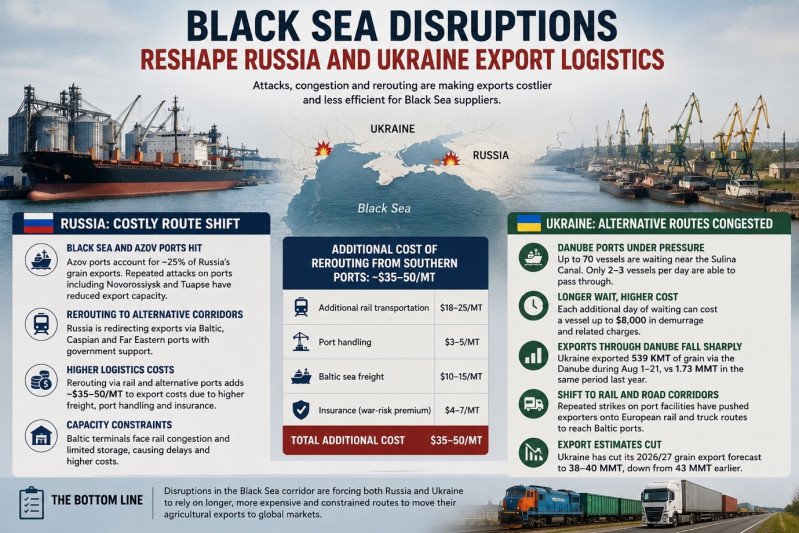
Attacks on Russian Black Sea and Azov infrastructure have disrupted a major outlet for grain. The Azov Sea previously handled roughly one-quarter of Russia’s grain exports. Repeated strikes on vessels and terminals around Novorossiysk and Tuapse have further reduced shipping. S&P Global reported five grain vessels hit near Russian Black Sea ports in the week of 17–18 August.
Russia is shifting cargo toward Baltic, Caspian, and Far Eastern routes, backed by government subsidies. Authorities have allocated around 10 billion roubles ($122 million) to support rail transport of agricultural exports. Alternative logistics carry a high price: industry estimates put the extra cost of redirecting cargo from southern ports at approximately $35–50 per metric ton through higher rail, port, freight, and insurance expenses. Baltic terminals also face constraints from increased rail dependence and limited storage.
Ukraine confronts similar pressures. Russian attacks have effectively halted maritime exports from the major Odesa-region ports, forcing a shift to the Danube, rail, and road corridors. As of 25 August, up to 70 vessels were waiting near the Sulina Canal while effective passage capacity had fallen to only 2–3 vessels per day. Each additional day of waiting can cost a vessel up to $8,000. Between 1 and 21 August, Ukraine exported just 539,000 tonnes of grain through the Danube, compared with 1.73 million tonnes in the same period a year earlier.
Ukraine has consequently reduced its 2026/27 grain export forecast from 43 million tonnes to 38–40 million tonnes.
For both origins, the central constraint is no longer crop availability alone. Export capacity, route reliability, and rising logistics costs increasingly determine how much agricultural supply actually reaches the global market.
Discover in real-time how our product can transform operations, enhance decision-making, and drive growth. Book your free demo today to see the difference for your business!

Global Intelligence for Pulses, Grains & Oilseeds
Empowering informed decisions across the agricultural value chain with timely market insights, forecasting models, and trade analysis.
Follow Us