From the Gulf to the Far East: How Geopolitics Is Reshaping India Kabuli Chickpea Export Markets
02 August, 2026
Admin
Global agricultural trade is increasingly being influenced by geopolitics, and India's Kabuli chickpea exports offer a compelling example of this shift.
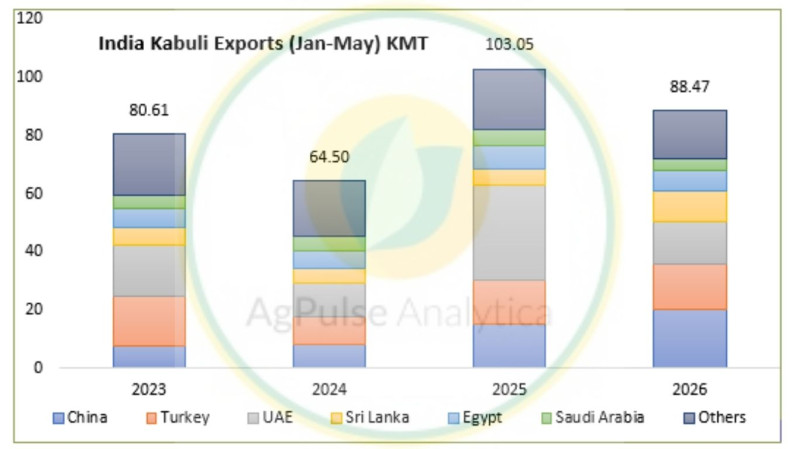
During the first five months of 2026, India exported 88,468 MT of Kabuli chickpeas, compared with 103,049 MT during the same period last year. While the overall decline may appear concerning at first glance, a closer analysis reveals a more nuanced story—the destination of Indian Kabuli exports is changing.
One of the key factors behind the weaker export performance has been the ongoing geopolitical tensions in the Persian Gulf. The conflict has dampened demand from the United Arab Emirates (UAE), traditionally one of the major destinations for Indian Kabuli chickpeas. Heightened regional uncertainty, increased logistics costs, and cautious buying behaviour have all contributed to softer import demand.
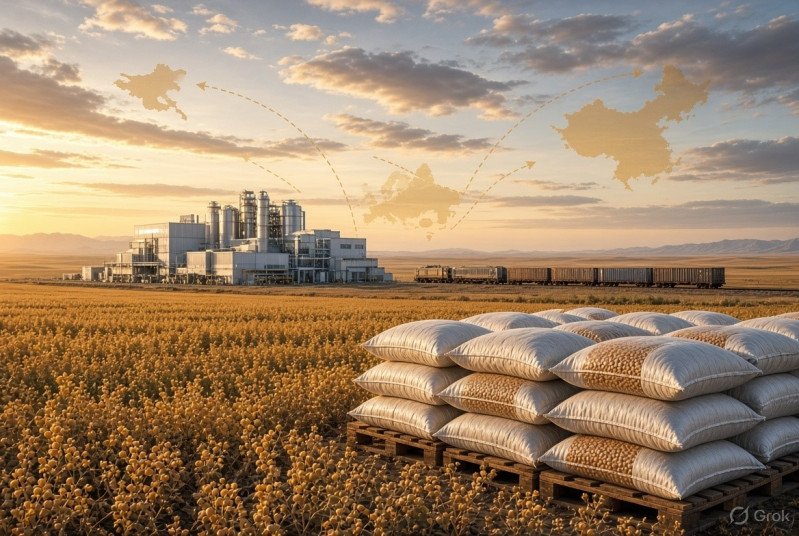
However, the decline in Gulf demand has been partially offset by the emergence of a strong alternative market—China.
Chinese imports of Indian Kabuli chickpeas have expanded significantly over the past three years. Imports increased from 9,357 MT in 2024 to 21,663 MT in 2025. Remarkably, China has already imported 20,174 MT during just the first five months of 2026, putting it on track to surpass last year's total if the current pace continues.
At AgPulse Analytica, we believe that monitoring where demand is shifting is just as important as tracking how much demand exists. In today's volatile trading environment, identifying these structural changes early enables market participants to adapt their export strategies and capture emerging opportunities before the market fully responds.
Discover in real-time how our product can transform operations, enhance decision-making, and drive growth. Book your free demo today to see the difference for your business!

Global Intelligence for Pulses, Grains & Oilseeds
Empowering informed decisions across the agricultural value chain with timely market insights, forecasting models, and trade analysis.
Follow Us