Indian Pulse Market Update: Monsoon Shortfalls and Kharif Seeding Lags
25 July, 2026
Admin
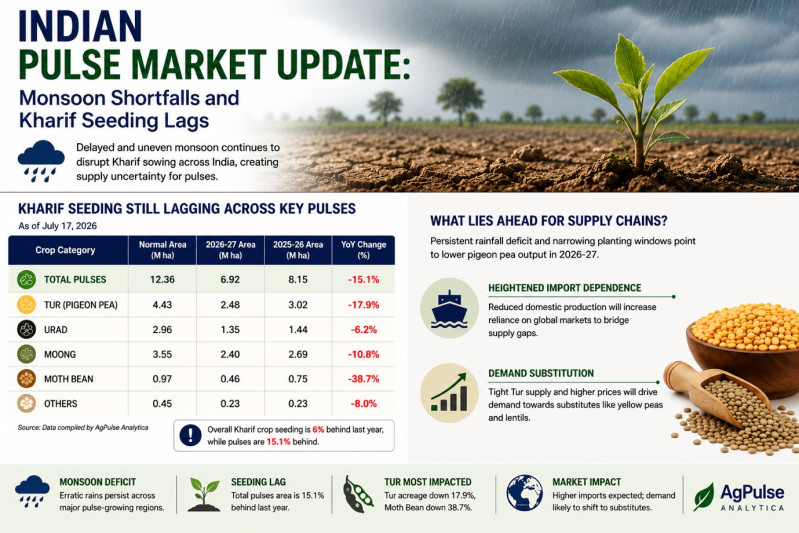
As the South Asian agricultural calendar progresses through July, all eyes remain firmly fixed on the performance of the Southwest Monsoon. With delayed sowing timelines and inconsistent rainfall, the pulse sector is facing significant supply-side uncertainty. At AgPulse Analytica, we break down the latest data on monsoon movements, sowing progress, and what these trends mean for domestic production and global trade dynamics.
Poor Run of Monsoon Continues
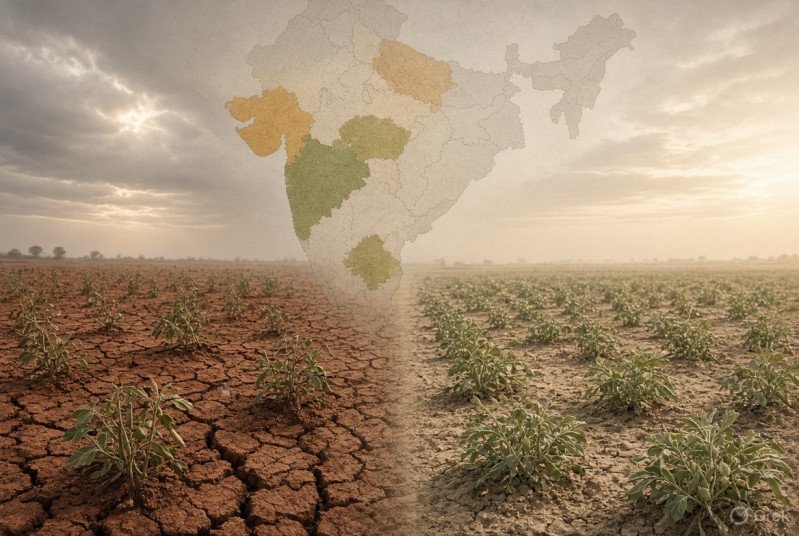
Showers remain elusive across large parts of the Indian Subcontinent, creating severe headwinds for the agricultural sector. The continued absence of timely and widespread rainfall has delayed Kharif planting across major pulse-growing belts.
Beyond simple delays, the erratic rainfall distribution is actively altering farmer seeding plans. With the ideal planting windows narrowing, the overall acreage map for the country's Kharif season is set to look markedly different this year compared to historical trends.
Kharif Seeding Still Lagging Across Key Pulses
Despite the lack of consistent rainfall, seeding activity has shown a slight acceleration over the past week as farmers take calculated risks. However, overall progress remains significantly behind schedule.
As of July 17, the overall Kharif sown area across all crops stands at 65.82 million hectares, compared to 70.05 million hectares during the same period last year—a total deficit of 6.0%.
|
Crop Category |
Normal Area (M ha) |
2026-27 Area (M ha) |
2025-26 Area (M ha) |
YoY Change (%) |
|---|---|---|---|---|
|
Total Pulses |
12.36 |
6.92 |
8.15 |
-15.1% |
|
Tur (Pigeon Pea) |
4.43 |
2.48 |
3.02 |
-17.9% |
|
Urad |
2.96 |
1.35 |
1.44 |
-6.2% |
|
Moong |
3.55 |
2.40 |
2.69 |
-10.8% |
|
Moth Bean |
0.97 |
0.46 |
0.75 |
-38.7% |
|
Others |
0.45 |
0.23 |
0.25 |
-8.0% |
(Source: Data compiled by AgPulse Analytica, as of July 17)
While overall Kharif crop seeding is trailing last year’s pace by 6%, the pulse segment is disproportionately affected, sitting 15.1% behind last year's figures.
The most acute concern lies in Tur (Pigeon Pea), where acreage has dropped to 2.48 million hectares, marking a sharp 17.9% decline compared to the 3.02 million hectares seeded by this time last year. Moth Bean has seen the steepest relative drop at -38.7%, while Moong and Urad lag by 10.8% and 6.2%, respectively.
What Lies Ahead for Supply Chains?
Given the persistent deficit in rainfall and shrinking planting windows, we anticipate that total pigeon pea seeding for the 2026-27 season will inevitably fall short of targets.
This shortfall will have cascading effects on South Asian pulse trade:
AgPulse Analytica will continue to monitor rainfall trends, regional soil moisture levels, and policy developments to provide real-time updates as the Kharif season unfolds.
Discover in real-time how our product can transform operations, enhance decision-making, and drive growth. Book your free demo today to see the difference for your business!

Global Intelligence for Pulses, Grains & Oilseeds
Empowering informed decisions across the agricultural value chain with timely market insights, forecasting models, and trade analysis.
Follow Us