India’s Next Tur Suppliers: Can Brazil, Argentina and Australia Reshape the Import Map?
13 November, 2026
Admin
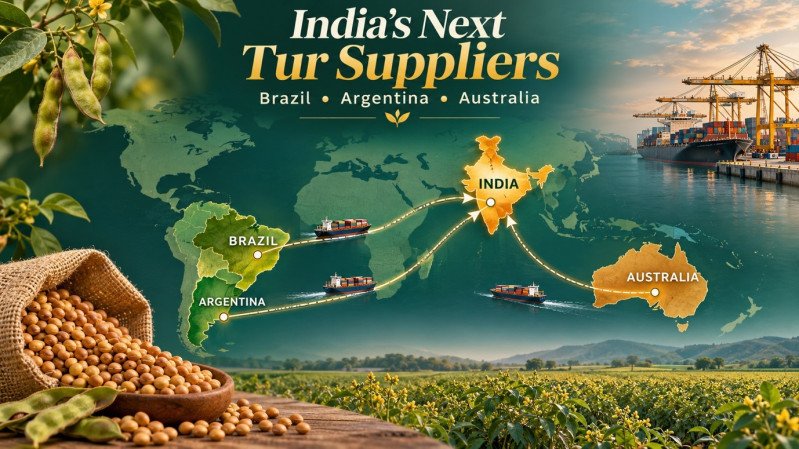
India’s tur import landscape may be entering a new phase. With domestic production vulnerable to weather disruptions, India is exploring alternative suppliers beyond Myanmar and East Africa. Brazil, Argentina and Australia offer promising opportunities—but how much can they realistically contribute?
Brazil: The First Mover
Brazil appears closest to commercial entry. Farmers have begun cultivating tur specifically for India, with initial exports estimated at 20,000–30,000 tonnes in late 2026, subject to phytosanitary clearance. Its mechanised agriculture and established urad trade with India provide a strong foundation. Future expansion, however, depends on assured demand, competitive pricing and regulatory approvals.
Argentina: An Untapped Opportunity
Argentina has suitable growing conditions in its northeastern regions, where pigeon peas are already cultivated on a limited scale. Discussions with India have opened possibilities for commercial exports. However, large-scale production remains unproven. Investments in suitable varieties, contract farming, processing infrastructure and reliable procurement arrangements will determine its potential.
Australia: The Long-Term Contender
Australia offers particularly interesting prospects. Queensland field trials have demonstrated pigeon pea yields of 1.4–2.0 tonnes per hectare using early-maturing varieties suitable for mechanised harvesting.
At these experimental yields, cultivating 50,000 hectares could theoretically generate 70,000–100,000 tonnes. However, commercial yields, competing crops, production costs and market certainty remain important considerations.
The Bigger Question
India has extended free imports of tur until March 2027, but policy uncertainty remains a significant obstacle to long-term overseas investment.
Prospectsare promising. These origins can stabilise supply, improve quality consistency and give India greater negotiating power. Southern Hemisphere harvests also help fill seasonal gaps.
Challenges remain real. Phytosanitary clearances, seed adaptation, pest management and scaling from trial to commercial levels will take time. Growers in new origins often seek assured offtake before expanding acreage. Logistics costs, weather variability and competition with more established crops could slow progress.
If these hurdles are managed through coordinated trade diplomacy and assured demand signals, Brazil, Argentina and Australia can meaningfully diversify and strengthen India’s tur import basket in the coming years.
Discover in real-time how our product can transform operations, enhance decision-making, and drive growth. Book your free demo today to see the difference for your business!

Global Intelligence for Pulses, Grains & Oilseeds
Empowering informed decisions across the agricultural value chain with timely market insights, forecasting models, and trade analysis.
Follow Us