Part 5:- India Lentil Market Outlook: Imports, Domestic Supply and Global Trade Reshape Dynamics
11 September, 2026
Admin
Related article:
Part 1: Canada Strong Lentil Production Base Supports Global Export Leadership
Part 2: Australia Rising Influence in the Global Lentil Market
Part 3: Russian Lentil Production and Exports Expanded in 2025/26
Part 4: Turkey Expanding Lentil Imports Drive Supplier Competition
India’s lentil market is entering an increasingly important phase as domestic production, import demand, government policies, and global supply dynamics shape the outlook. Lentils, locally known as masoor, are an important source of affordable protein and are widely consumed across the country. Domestic production is concentrated mainly in Uttar Pradesh, Madhya Pradesh, West Bengal, and Bihar.
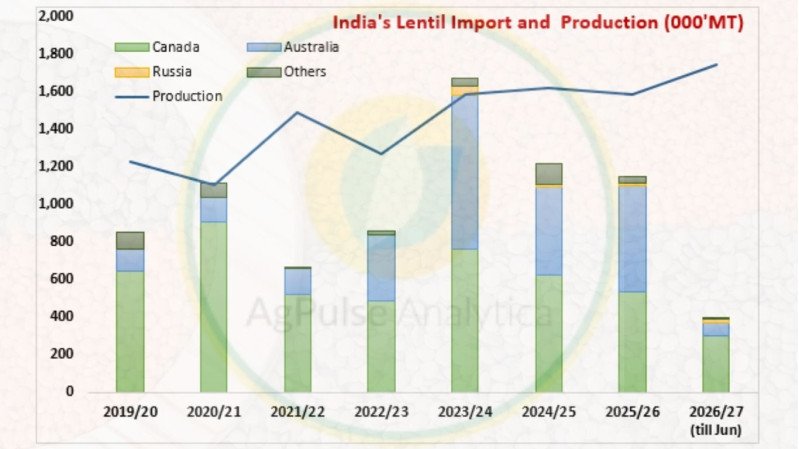
India’s dependence on overseas supplies remains significant. Lentil imports increased by more than 163% year-on-year during April–June 2026, highlighting strong import activity and growing reliance on international markets. Canada and Australia remained the principal suppliers, while Russia is gradually emerging as an additional source.
During 2025-26, India imported approximately 1.15 million tonnes (MMT) of lentils, compared with 1.22 MMT in 2024-25. Australia was the leading supplier with around 0.56 MMT, followed by Canada at approximately 0.53 MMT and Russia at nearly 19 KMT.
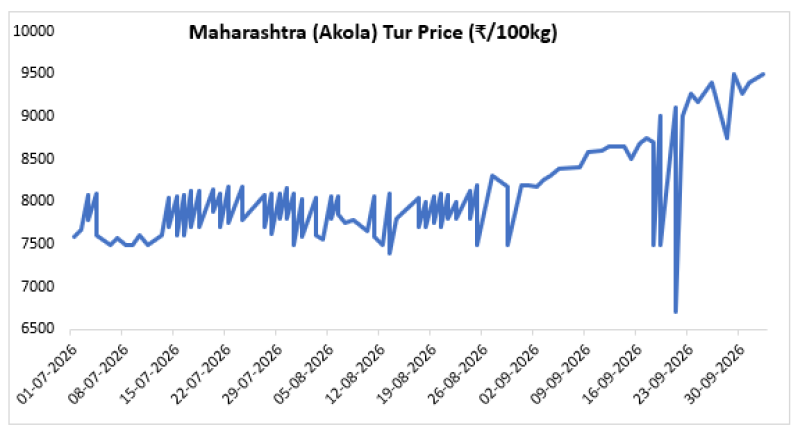
An important factor supporting lentil demand is its potential substitution for tur (pigeon pea). With India’s tur production expected to be lower this year, consumers, millers, and traders may increasingly use lentils as an alternative pulse where price and availability allow. This could provide additional support to domestic lentil demand and imports.
On the supply side, farmer selling decisions in Australia and Canada will be critical. If growers hold a larger portion of their lentil crop in anticipation of better prices in the coming marketing year, export availability could tighten. This could push international lentil prices higher, particularly if weather risks associated with an El Niño pattern begin affecting pulse production. A combination of lower farmer selling, weather uncertainty, and stronger Indian demand could therefore create a more bullish price environment.
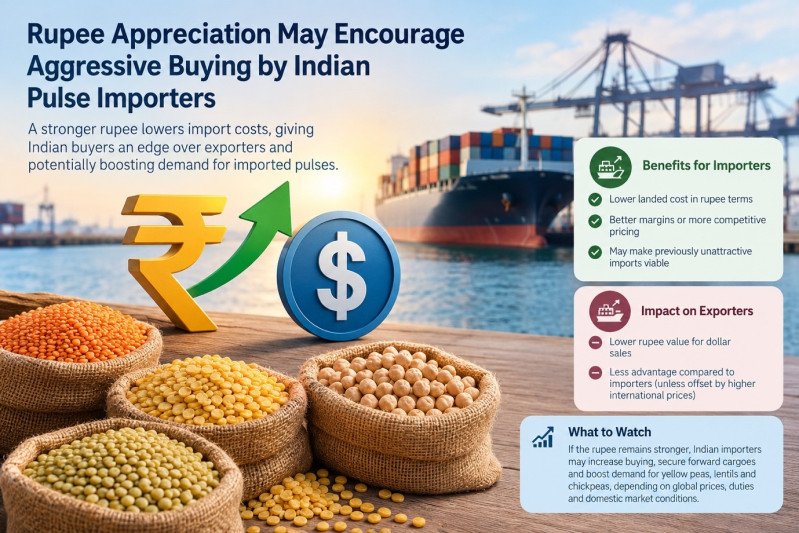
Government trade policy will also remain important. Import duties, tariff exemptions, and import-window policies can quickly influence landed costs and buying decisions. Going forward, India’s tur shortage, substitution demand, supplier holding patterns, and global weather risks will be key factors determining the direction of the lentil market.
Contact or subscribe to AgPulse Analytica for detailed information and MY 2026/27, along with deeper market insights and detailed analysis for informed decision-making.
Discover in real-time how our product can transform operations, enhance decision-making, and drive growth. Book your free demo today to see the difference for your business!

Global Intelligence for Pulses, Grains & Oilseeds
Empowering informed decisions across the agricultural value chain with timely market insights, forecasting models, and trade analysis.
Follow Us